
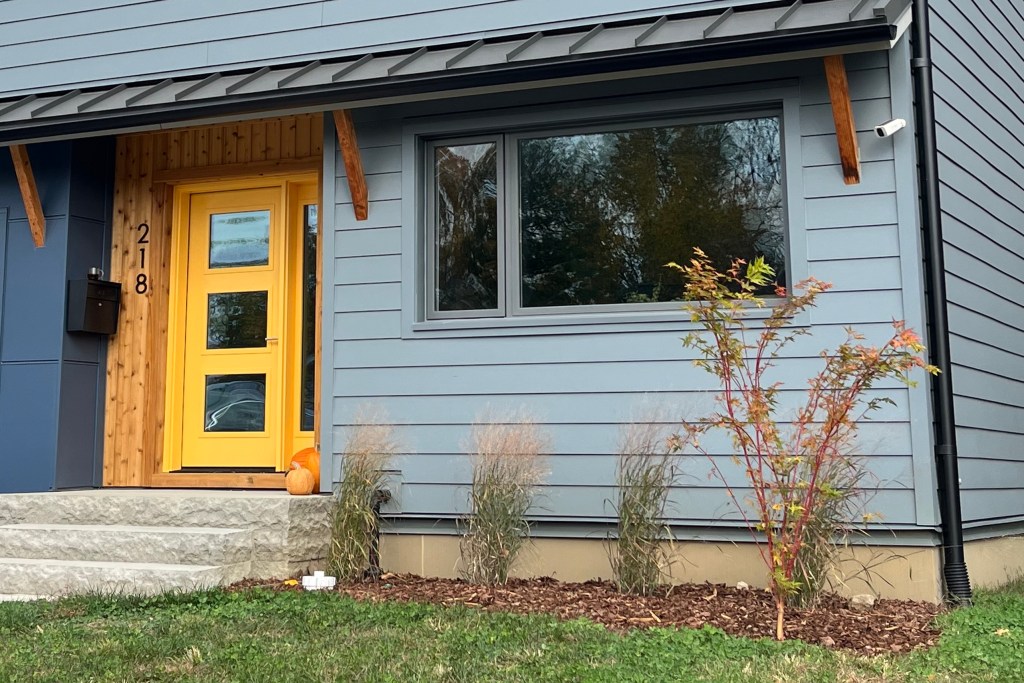
You all knew by now I’m certifiable. And now it’s official: Clintonville Passive House is a Certified Passive House under the Phius ZERO 2021 standard! That means that not only does this project meet all requirements as a passive house, but it’s net zero energy to boot. It’s also the first certified single-family passive house in Central Ohio. Check out the listing in the Phius Certified Project Database in case you’re the “trust but verify” type like me!
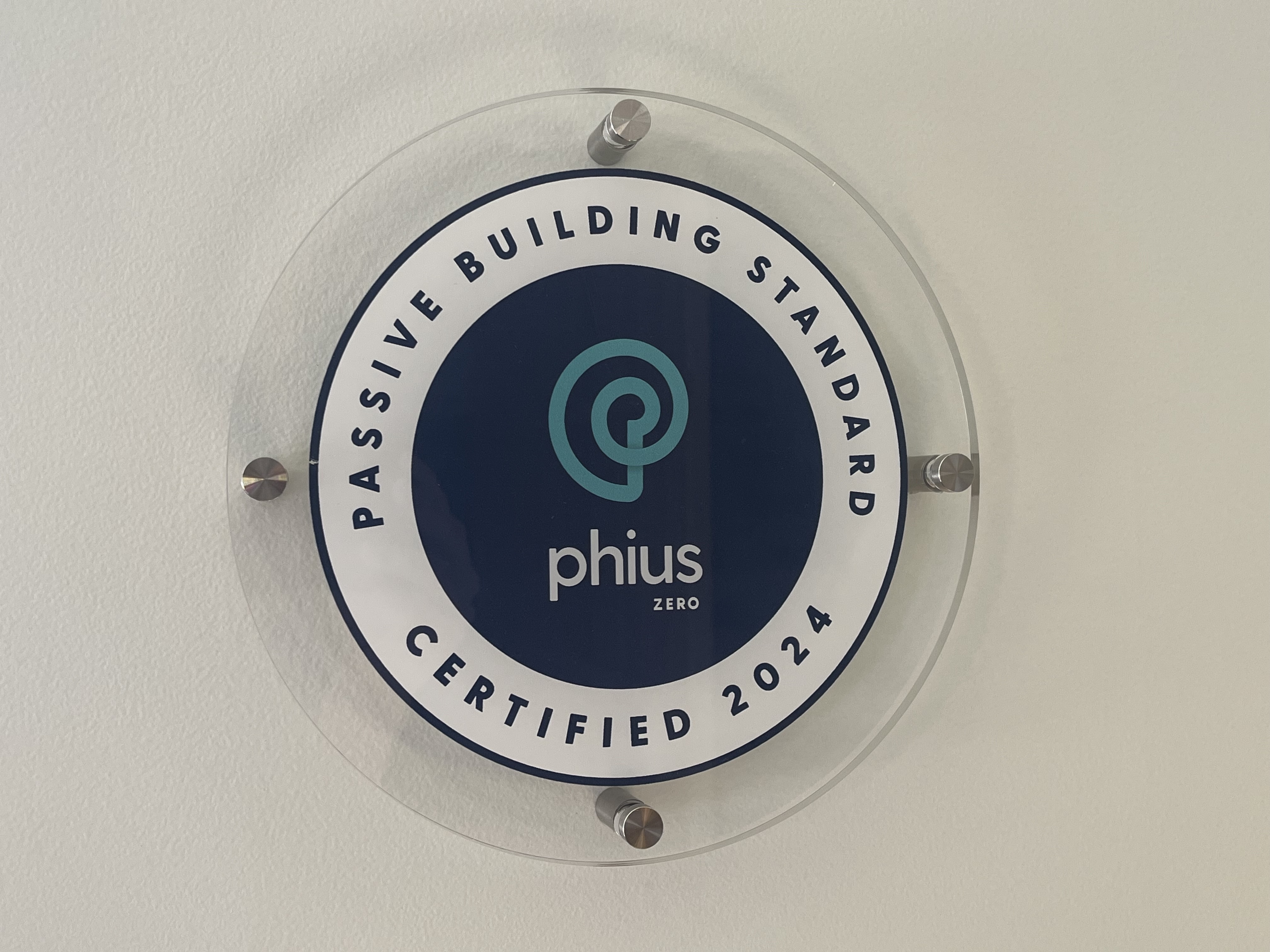
Here’s what it actually means for Clintonville Passive House to be Phius ZERO 2021 certified, starting with the most important aspects first:
Comfort
We have no drafts and no hot or cold spots in the house. Sitting in a chair by a large window feels just as good during the winter as it does during the summer. This is a far cry from the typical house in the area, even from other brand new homes. And despite being right next to a busy city street, with properly installed triple-pane windows, great airtightness, and exterior insulation, it’s surprisingly quiet inside. We certainly still notice when the ambulances and fire ladder trucks go screaming by. Ain’t nothin’ perfect. But this is a pretty comfortable place to be.
Airtightness
Passive houses are designed to be as airtight as possible. This is partly to reduce energy costs associated with losing conditioned air. It’s also to minimize moisture accumulating in the structure from condensing water vapor that air carries with it. The envelope (roof, walls, and floors collectively) of a passive house must keep air leakage to at most 0.040 cfm per square foot of conditioned floor area. Clintonville Passive House manages 0.027.
For those more familiar with ACH1 (air changes per hour) figures, Clintonville Passive House’s airtightness comes out to be 0.52 ACH50—almost ten times less than the residential code max of 5 ACH50.
Excellent airtightness must be paired with proper ventilation–you know, so we can breathe and stuff.
Ventilation & Air Quality
Balanced, continuous, energy-recovery ventilation is a wordy term for bringing fresh air into a space while exhausting stale air at the same rate to avoid air pressure imbalance between inside and outside. This is done constantly, with the air streams passing through a heat and humidity exchanger to minimize energy loss from conditioning the incoming fresh air.
The ASHRAE 62.2 standard sets minimum fresh air ventilation rates2 for residential spaces to ensure good indoor air quality for occupants. This and number of other requirements in the Phius standard also ensure high air quality by keeping carbon dioxide and other air pollutants’ concentrations low.
Formaldehyde-containing building materials are strictly controlled. I avoided products (such as adhesives, paint, and vinyl) with VOCs as much as possible in construction to prevent off-gassing later.
A required passive radon mitigation system keeps that radioactive gas at bay. Radon is a significant concern in central Ohio and in much of the US. Prior to me completing the passive radon mitigation system, the average of two tests told me my radon concentration inside was above 10 pCi/L. That’s 2.5 times the action limit. After mitigation, the test showed levels at 1.4 pCi/L, or about a third of the action level. If you’ve never tested your house for radon, and especially if you’re in Zone 13, I recommend taking a look.
The air we breathe is filled with wonderful stuff, real life-giving gases. Unfortunately, there are also a slew of contaminants in it that can really mess us up. I have an air quality monitor in the house now to measure a variety of contaminants. I’m looking forward to reporting some of my findings soon as I start to gain some longer term insights.
Durability
CPH is durable owing to its super low air leakage, exterior continuous insulation, and the ventilated rain screen cladding system.
Airtightness prevents moisture-laden air from making its way through the building envelope, where it could otherwise condense into liquid water, causing mold and rot. Exterior insulation is like a sweater that keeps the structure warm and dry. The rain screen keeps water draining off the back of the siding and air flowing through to carry water vapor up and out of the wall instead of being driven into it. There are a lot of ways increased insulation can be dangerous to a building if not applied very thoughtfully. Proper application of building science and the independent design and construction reviews help passive house projects avoid issues.
Energy Efficiency
I put comfort, air quality, and durability first because I think those are two of the biggest benefits of a passive house. But there’s no mistaking the achievements of a passive house in the energy department either.
Total energy expenditure for an average midwest household is 96.9 million BTUs annually, according to the Energy Information Administration, or EIA4. CPH is projected to use less than 34 million BTUs (or 10,000 kWh), so just over a third of that. This takes into account energy from all sources, including for space heating/cooling, water heating, and electricity use of all kinds.
Here are the Phius space conditioning targets and achievements for this house, in kilowatt-hours since this is an all-electric build:
- Annual heating energy 4,720 kWh —> Actual 3,710 kWh
- Annual cooling energy 3,840 kWh —> Actual 2,600 kWh
- Peak heating power 3.62 kW —> Actual 2.62 kW
- Peak cooling power 1.59 kW —> Actual 1.04 kW
Net Zero Energy
The relatively small amount of energy this house does consume is offset by renewable energy produced on site. Its HERS (Home Efficiency Rating System) index with renewables is -4. With the rooftop solar array, Clintonville Passive House is actually anticipated to produce more energy than it uses. After the house has gone through an entire year of solar production, I’ll let you know how that’s shaken out.
Clintonville Passive House is not saving the planet. It’s not even saving my city, or neighborhood. It’s only one example, and an imperfect one. But the example it sets is way better than the norm. It shows the improvements high-performance building can have for the environment and occupants alike. I’m proud to have built a certified passive house.
Thanks for reading, and make sure to subscribe.
Subscribe
Sign up for notifications of the latest blog posts and exclusive content as it comes out!
Footnotes
- Phius defines a CFM50 airtightness target based on the total envelope area of a building. This is in contrast to the commonly used parameter ACH50 (air changes per hour at 50 pascals pressure) which is based solely on the internal volume of a building. CFM50 is the right way to measure it, because air leakage happens through surfaces, not through volume. Check out Allison Bailes’ excellent article on the topic here. ↩︎
- https://www.energy.gov/eere/buildings/articles/ashrae-standard-622-ventilation-and-acceptable-indoor-air-quality-low-rise ↩︎
- https://www.city-data.com/radon-zones/index.html ↩︎
- https://www.eia.gov/consumption/residential/data/2020/index.php?view=consumption ↩︎


Leave a Reply