
A final piece of the Clintonville Passive House design was completed a couple weeks ago. Though I’d designed it into the plans from the start, it wasn’t exactly a part of the house itself. Yes, our rain garden is installed, and plants are tucked into their bed awaiting next year’s heavy spring rains and a season of growth! But it’s more than just flowers for flowers’ sake.
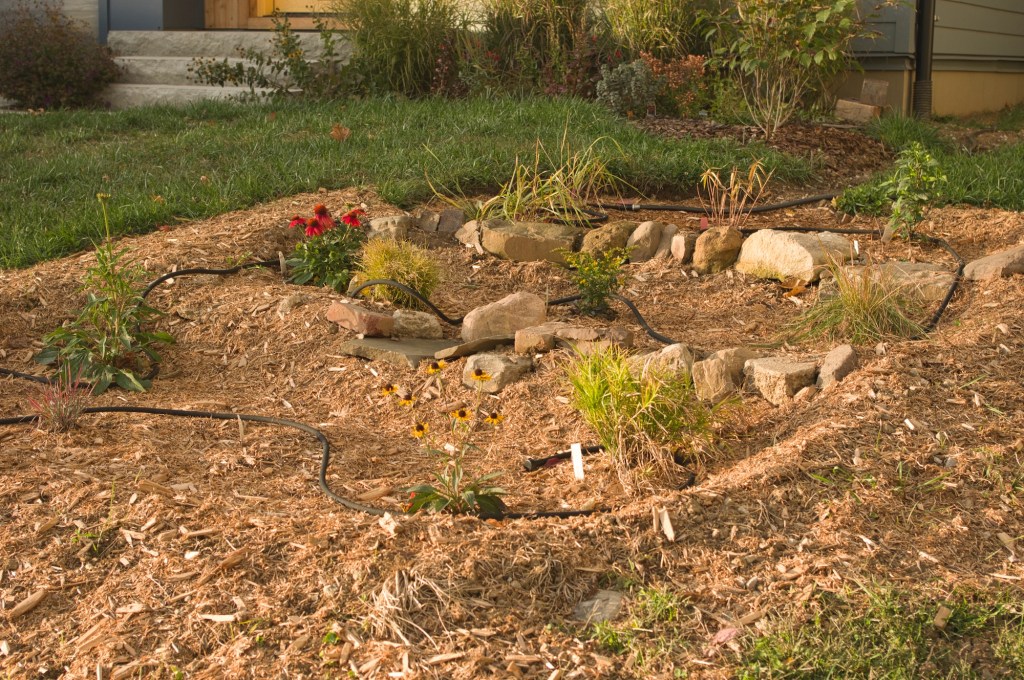
Water is important. That much we all know, even though we frequently take it for granted. But our waterways are under assault all over the world from centuries of neglect and mismanagement. The rivers of Columbus, Ohio are no exception. Pollution enters our streams from chemical fertilizers, pesticides, and herbicides; industrial waste; storm water and sewage overflows. It’s that last set of problems that my little rain garden is specifically designed to help with.
Storm water—surface water from rain and snow melt—carries all sorts of contaminants that wash off yards, roadways, and parking surfaces. Sanitary sewers—which contains human waste—carry everything you flush down drains and toilets at home plus more. In most modern places, these two systems are entirely separate from one another. That allows the two streams of wastewater to be handled and treated differently to remove the unique pollutants of each individually. Columbus has what’s called a combined sewer system. That means storm water and sanitary sewage come together into the same pipes.

While the sanitary sewer flow rate stays relatively constant, storm water flow varies wildly. During high rain events, combined sewers can overflow as the capacity of the system is overwhelmed by a surges of storm water runoff. Sewer effluent that’s normally treated at wastewater facilities ends up going straight into the river. It’s not so bad, though: the City of Columbus Division of Sewerage informs us that the targeted number of combined sewer overflow events for 2025 is only 75, which it refers to as a “high standard.” Hey, it’s down from 93 in 2023!1 Feel better?
“What kind of awful sewer system works that way?!” you may ask. Actually, it’s a system that’s used in over 700 other communities in the US, mostly concentrated in the Northeast and Great Lakes areas—though Seattle does a great job representing the PNW area with no less than 80 combined sewer overflow locations around the city. 2 Columbus is in great company along with New York City, Chicago, Cincinnati, and Boston, to name only a few players in the combined sewer major league. And as if we didn’t already know that our nation’s capital is a perennial cesspool of sorts, it’s also a literal one, with sewage circulating all around the Potomac and Anacostia Rivers when the rain comes down hard.

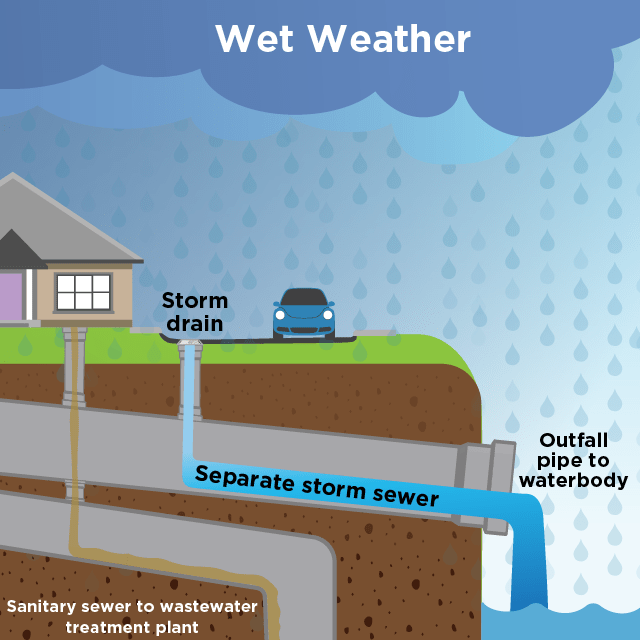
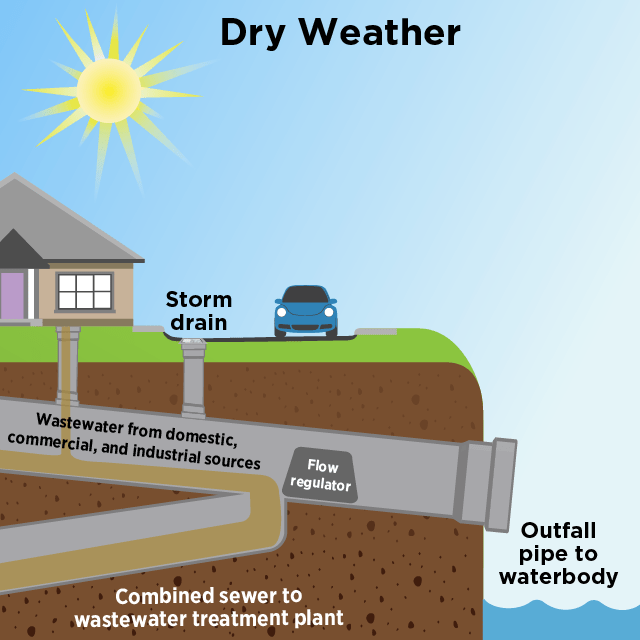
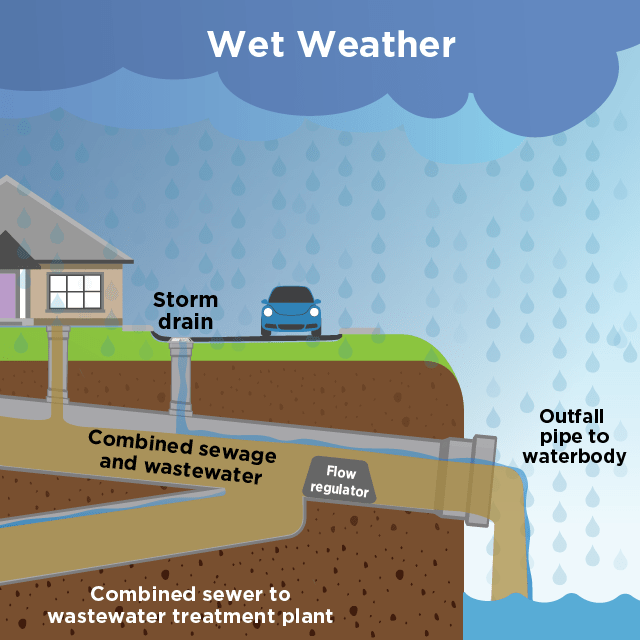

Yes, a combined sewer is an awful system. It wouldn’t necessarily be so bad if the capacity of the systems were always high enough to safely contain and treat all wastewater at all times—but in lots of places they aren’t. The problem compounds when we build impervious surfaces like parking lots, roads, driveways, and roofs, without matching it with equal amounts of increased capacity to handle the runoff. We either need increased storm sewer capacity with the addition of each impervious surface added, or we need to design other ways to manage runoff. So, what’s all this got to do with the flower bed in my front yard, anyway?
This little garden is my attempt to manage as much of my own runoff on site as possible. It has the potential to keep up to 24,000 gallons of water out of the storm water system every year by catching the water from my roof and sump pump.3 The basin itself can hold at about four bathtubs worth of water at full capacity. The native plants inside root deeply are very resilient to wet conditions as well as occasional droughts and will help filter water as it gradually seeps down into the water table over a few hours to a day or so following a rain event. Surface runoff is kept from flowing into the Olentangy River or forcing worse-polluted water in instead.
Even better yet, I get to watch the native flowers, grasses, and sedges grow and be enjoyed by all sorts of native creatures that need these plants to survive.
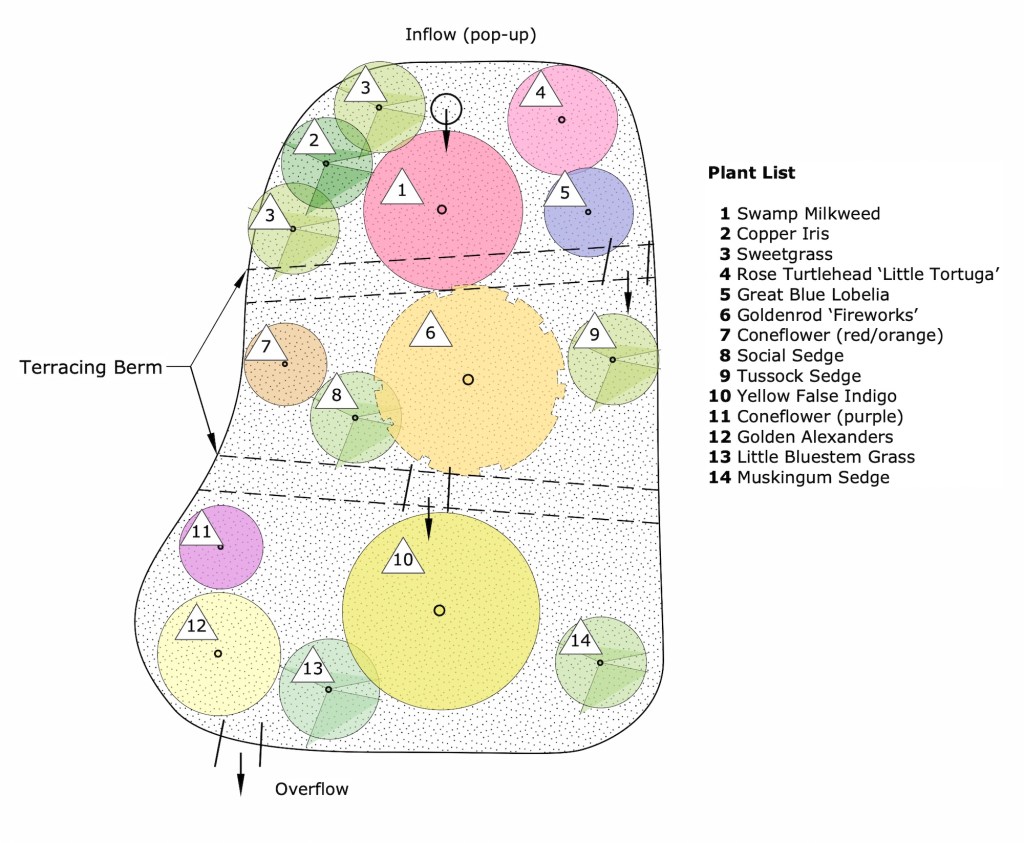


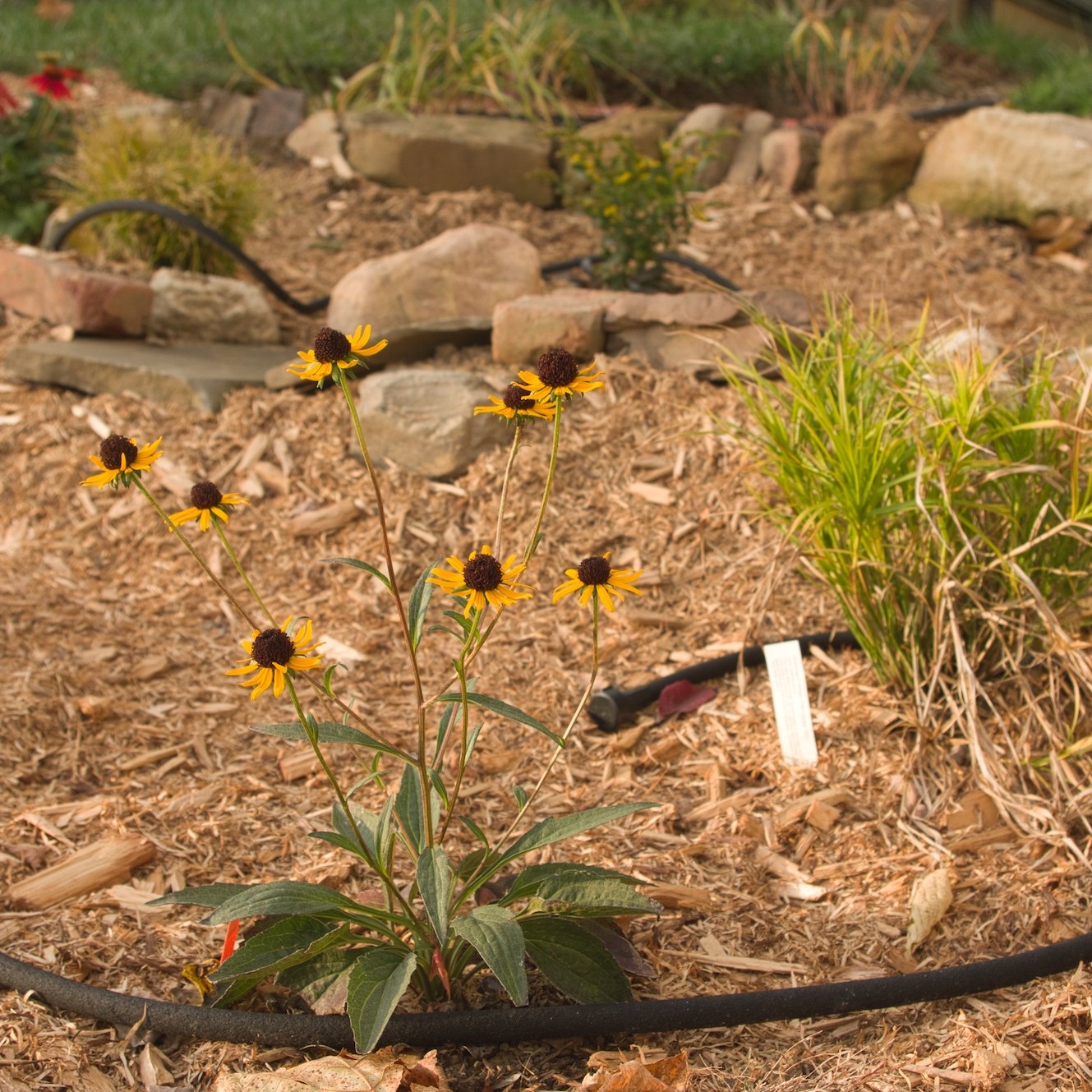
I don’t want to be too hard on Columbus for all the combined sewer issues. As is commonly the case, we people of today have inherited this mess. Bad design and poor planning of the past have stuck us with the situation we have today. Fortunately, there are programs that are slowly chipping away at the problem like Blueprint Columbus,4 which is helping to reduce runoff and storm water from entering the sewer in the first place, and a major new sewer tunnel is being built along the Olentangy that will increase system capacity.
My own rain garden is the beneficiary of the Community Backyards program from the Franklin Soil and Water Conservation District. I’m awaiting a rebate in the amount of $250 to help finance its construction. This will cover most of my material costs to build and plant it, though the labor was personal sweat equity provided by me. Still, the program provides great incentives for most Franklin county residents. Whether you’re looking to help manage your runoff or are interested in helping native critters and pollinators, I encourage you to consider installing a rain garden if you haven’t already. Your local soil and water conservation district or sewer division may have information or even incentives.
If you happen to live in Franklin County, Ohio, check out Community Backyards. ➞ (https://www.communitybackyards.org/default.aspx)
Cheers!
Subscribe
Sign up for notifications of the latest blog posts and exclusive content as it comes out!
- From a City of Columbus Department of Public Utilities budget document: https://www.columbus.gov/files/sharedassets/city/v/1/finance/budget/2025/035-2025.pdf ↩︎
- Looking at a map, it genuinely looks as though Seattle implemented combined sewer overflows as some sort of medieval sewage-based maritime defense system. https://www.epa.gov/npdes/where-combined-sewer-overflow-outfalls-are-located ↩︎
- My roof surface is right around 1000 square feet of horizontally projected area, and average annual rainfall is about 38 inches in Columbus, which comes to about 24,000 gallons of annual rainfall collected from my roof. ↩︎
- https://blueprintneighborhoods.com ↩︎
 Clintonville Passive House
Leave a comment