

Well, now that the trees have been sliced into boards and safely stored away off premises, the logical next step has come for this project. I shall dig myself a hole and begin to put a house in it.
Perhaps that’s easier said than done, especially on a tight city lot such as this. Space is certainly at a premium on the Clintonville Passive House site, and digging with large machines like excavators and skid-steer loaders requires sequential execution of each carefully planned step.
Without getting too into the weeds, for me that meant meant first mapping the topography of my lot and calculating the volume of dirt that would need to be dug to ensure there was enough space for the pile on site while still maintaining a minimum amount of clearance around the dig to finish the work of putting in the foundation. I modeled the topography and my house in a 3D CAD program to facilitate that first part, while some research on soil expansion, or swell factor, and “angle of repose” allowed me to figure the volume and footprint of the dug earth pile with reasonable enough accuracy to decide whether or not I would have enough room during excavation.
Knowing upfront how much earth I’d be dealing with was also key to figuring exactly what depth I would place the foundation by design. Dig too deep and I would wind up with far too much expensive haul-away, but dig too shallow and I could end up with a house that sits too high to be graded properly upon completion. According to my careful calculations, the size of my dirt pile would be…really big. But I could just make it work with a couple truckloads of exported dirt.
By the way, my excavation contractor did a great job rolling with the challenges of this location and putting in the care required to get the job done properly and without backing himself into a corner with his equipment.
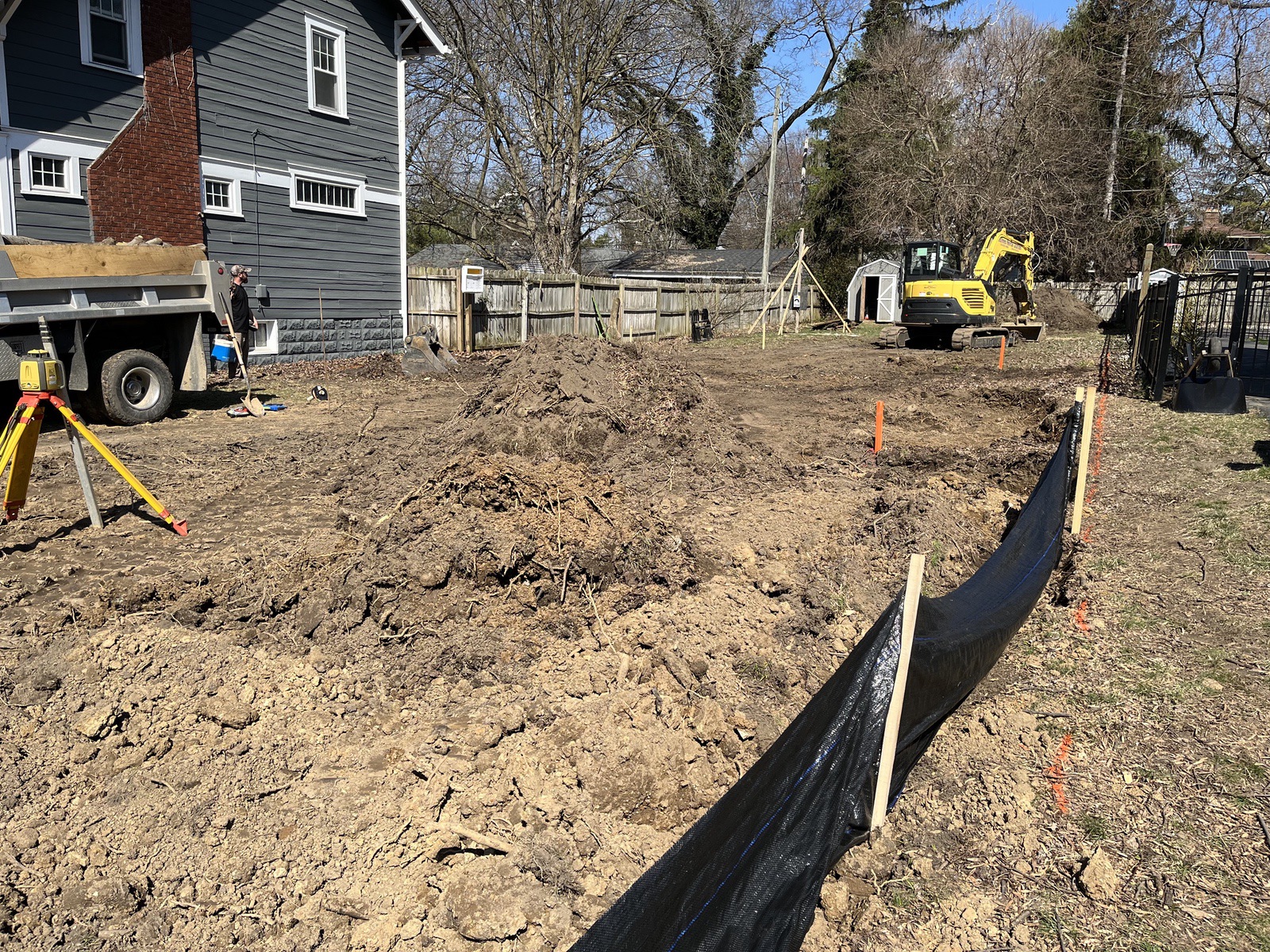
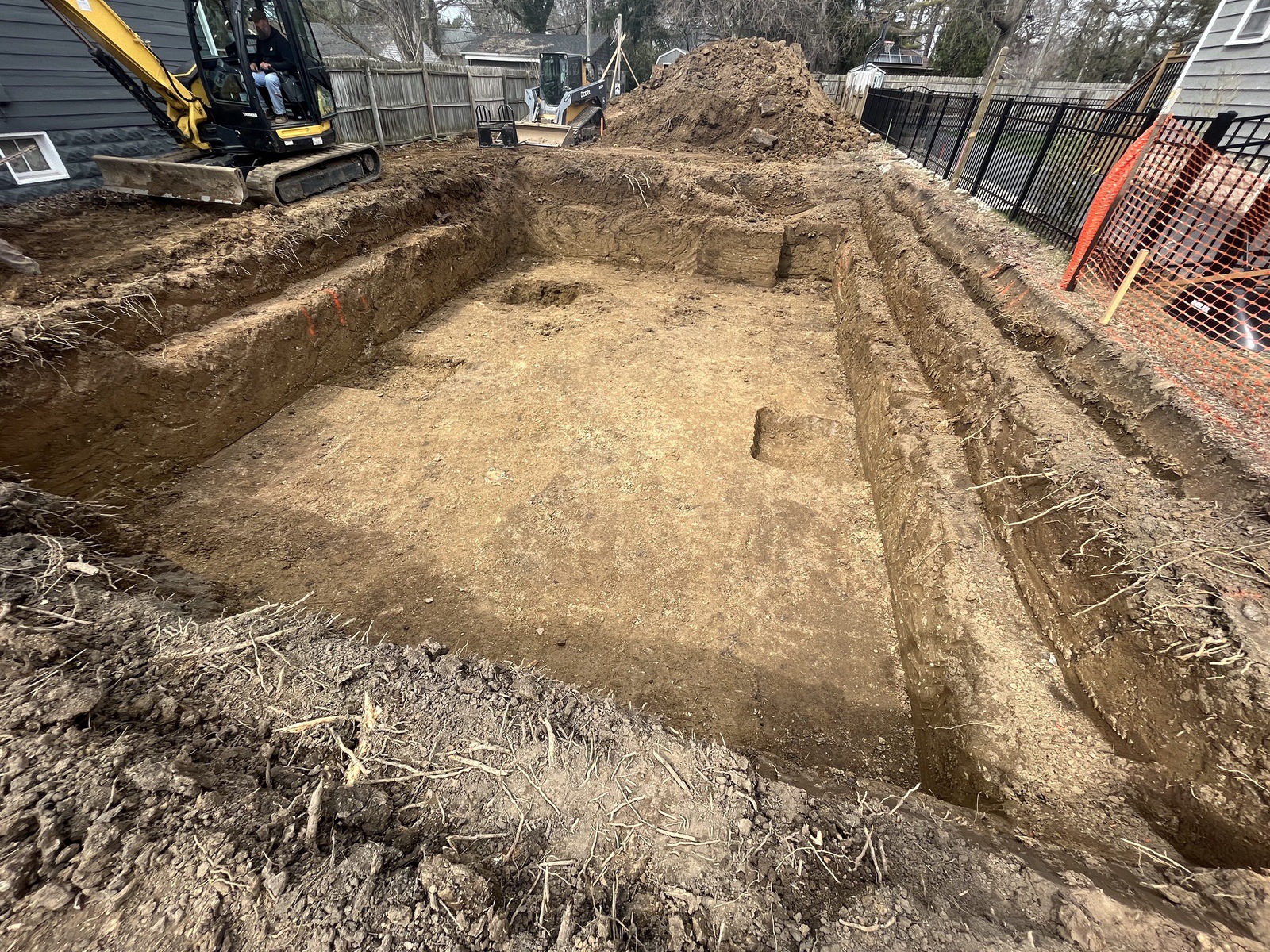
I’m preparing for a precast concrete wall system to be placed as the foundation. This doesn’t make a whole lot of difference at the excavation stage. The main thing is that there will be no poured footings as are typical in cast-in-place foundations. Instead I’ll have a layer of crushed stone leveled and compacted to serve as the footing by distributing the weight of the wall panels to the soil.
On the one hand, it’s a massive relief to have this phase of the project done. On the other, this marks the true beginning of construction, and there’s much work ahead. There is no going back now. I have dug myself a hole!
Next comes placement of the precast foundation walls, and I’ll also start to touch on the key components that make a passive house.
Thanks for visiting. And if you like it, subscribe to get updates when new posts come out!
 Clintonville Passive House
Leave a comment