
Every new project has a beginning point. While the beginning of Clintonville Passive House goes back a couple years in terms of idea making, design, and planning, the physical start happened a couple weeks ago with the necessary task of clearing the site to make way for excavation. This meant removing some trees, bushes and a fence from the property that stood right where the house is to be placed.
I’ve always had a respect for all living things, and trees are no exception. From an early age, I developed a knack for spotting the ones that were good for climbing. So, although it had been obvious from the outset that I would have to cut down two beautiful, healthy trees in order to move forward with the project, it was a sad day when the time came to actually do the work.
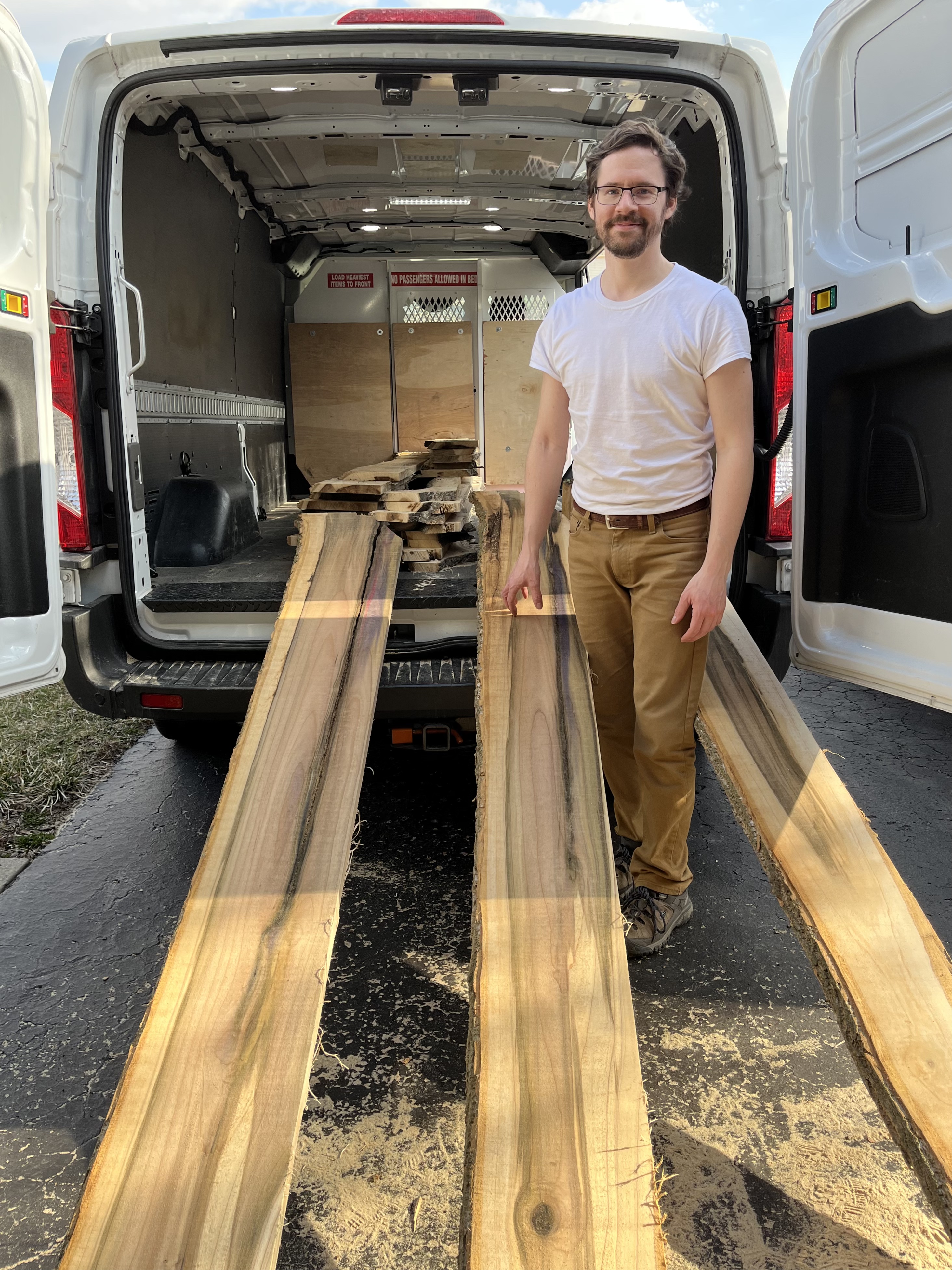
I had a plan, though, to honor my trees as much as I could. Fortunately, I worked with a tree service company that worked diligently to cut the two tulip poplars down in such a way that I could preserve a few straight logs to be cut into boards. A call to a local sawyer set me up with an appointment to have them cut on site into rough lumber.


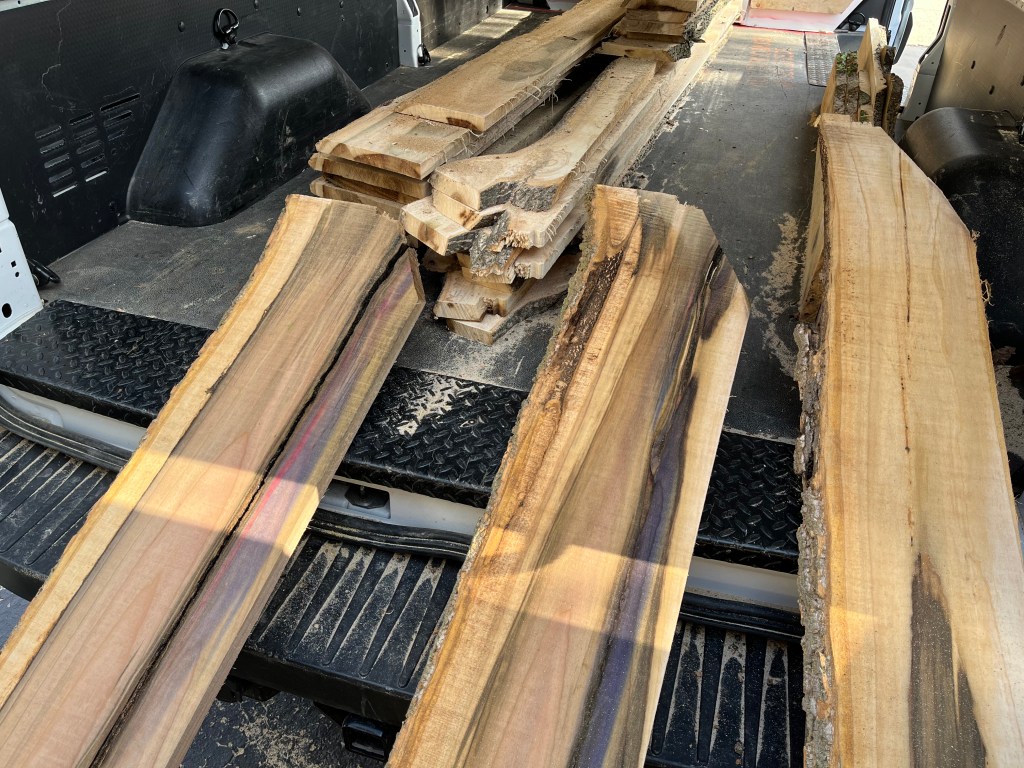
Poplar isn’t exactly the most high-value wood on the market, and it commonly gets painted in its final end use. I say it’s an under-appreciated wood with many desirable characteristics in its typical form: straight-grained, fairly uniform, and very workable with tools. Fascinating things can sometimes happen with poplar wood, however, that elevate it from a mere utilitarian hardwood. Called “rainbow poplar” the effect of minerals pulled up through the tree’s tissue over years can stain the wood an intriguing variety of colors rarely displayed in most species.

I was lucky enough to find some rainbow in one of my trees. While some of the wood was also damaged by a small vein of rot from the outside, I was able to get several solid boards with purple, green, blue, and red streaks. I don’t have firm plans for where to use this wood just yet, but look for some of it to appear in the finished house, exactly where it belongs by right.
The next step is excavating. Until then, thanks for reading!
 Clintonville Passive House
Leave a comment